

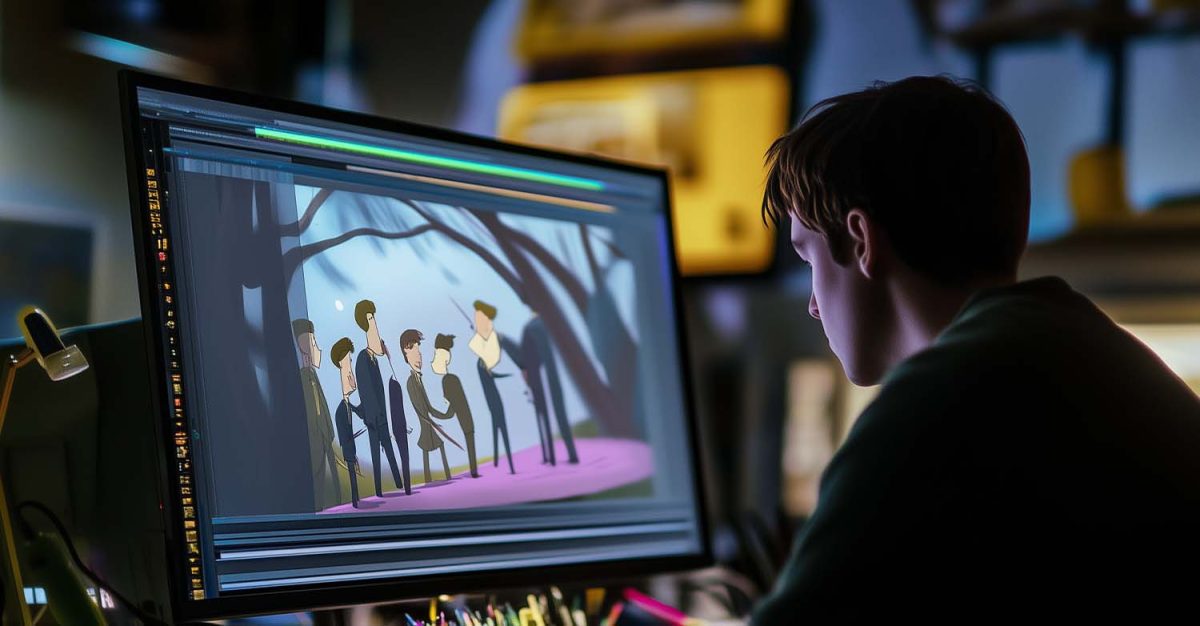
Animation in 2026 isn’t what it used to be and nor is it just about prettier visuals or faster tools. Today, animation is evolving on multiple levels all at once, from how we make it, who tells the stories and how audiences finally experience it. If you’re an aspiring animator, a student, or a seasoned pro, these shifts are shaping the future of the craft.
Style Isn’t “One Thing” Anymore
There was a time when “good animation” meant clean, polished motion at a high frame rate. Today, there’s no single definition of what simply good looks like. Hybrid styles that blend 2D and 3D, graphic roughness, intentional choppiness, painterly textures, and mixed-media visuals are becoming commonplace. These styles aren’t just gimmicks, instead they’re expressive choices that communicate mood, voice, and personality in ways that smooth, photo-real motion sometimes can’t. A shift like this means that animation isn’t just a technical craft anymore it has become its own visual language.
Technology Is Becoming Creative Fuel, Not a Barrier
New tools are accelerating how quickly ideas go from concept to screen. Real-time engines, smarter rigging systems, procedural animation tools, and even AI-assisted workflows are shortening tedious parts of the pipeline. That doesn’t mean animators are being replaced, what it means is that the boring stuff is being automated, freeing you up to focus on storytelling, character, performance, and creative problem-solving. Instead of spending many many hours on cleanup or in-betweens, you spend that time refining emotion and intent.
Collaboration Is Becoming More Fluid
The divide between disciplines is shrinking. Animators are working shoulder-to-shoulder with illustrators, narrative designers, game developers, audio artists, and UX/UI creators. Being an animator today often means understanding context. This includes everything from cameras and lighting to interactivity and user experience. Animators aren’t just motion specialists anymore they have become the creative integrators.
So What Does All This Mean for Animation in 2026?
Animation in 2026 isn’t about following a single “correct” pipeline or mastering a specific set of tools. It’s about learning how to think in motion, solve problems visually, and tell stories that feel alive, responsive, and genuinely human. Whether you’re just getting started or refining your skills after years in the industry, the future of animation favors creativity over conformity, flexibility over rigid workflows, and strong personal voice over surface-level polish. Ideas matter more than the tools used to create them. In short, animation isn’t disappearing, it’s quickly evolving. The animators who thrive will be the ones who can see beyond pixels and keyframes.
Learn more about the full range of Bloop Animation courses and grow your animation skills in 2026!