

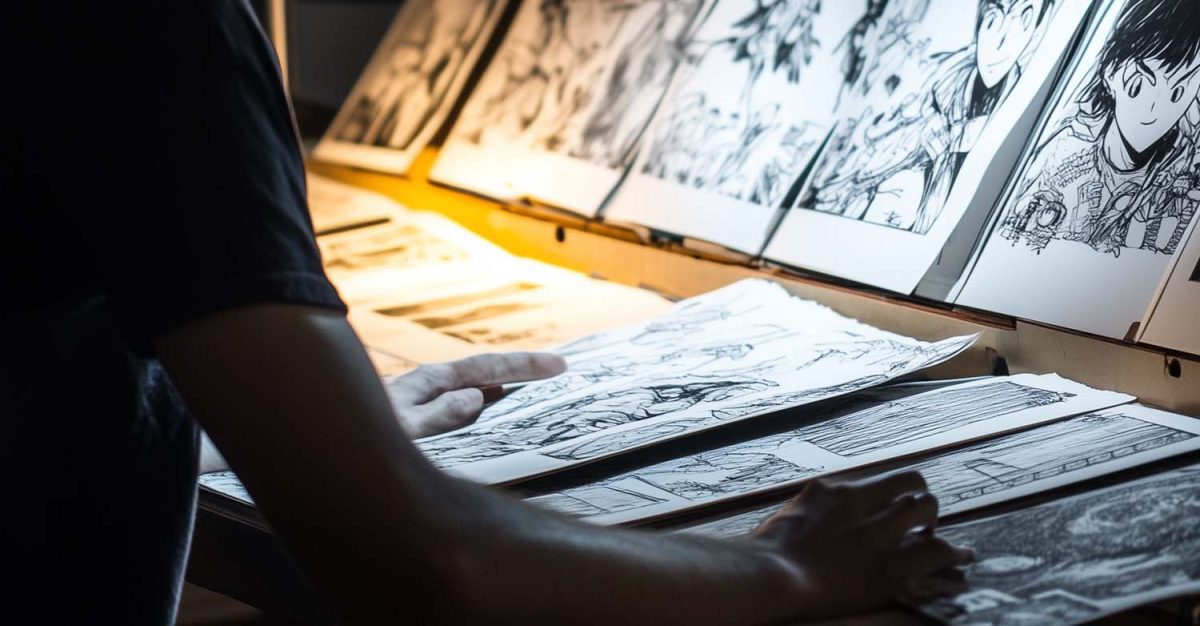
If you want to work in animation, one of the most important things you can create is your portfolio. Not a perfect portfolio. Not a huge portfolio. Not a portfolio filled with studio-level shots and years of professional experience.
Just a clear, focused collection of animation work that shows what you can do right now. That is where a lot of beginners get stuck. They think they need dozens of polished projects before they can put anything online. They wait until they feel “ready,” but that moment rarely arrives on its own.
The truth is that your first animation portfolio is not supposed to be your final portfolio.
It is a starting point. It gives you a place to collect your work, track your progress, and show people what kind of animator you are becoming.
In this guide, we’ll go through how to build an animation portfolio from scratch, what to include, what to avoid, and how to make your work look as professional as possible, even if you are just starting out.
If you’re completely new to animation, you may also want to start with our Animation for Beginners guide before building your first portfolio.
Quick Answer: What Should Be in an Animation Portfolio?
A beginner animation portfolio should include a short demo reel, 3 to 5 strong animation pieces, clear project descriptions, process work where useful, your role on each project, and easy contact information.
The goal is not to show everything you have ever made. The goal is to show your best and most relevant work.
A good animation portfolio should quickly answer these questions:
- What kind of animator are you?
- What type of work do you want to do?
- How strong are your animation fundamentals?
- Can you finish a project?
- Is your work easy to watch, understand, and evaluate?
If your portfolio does that, you are already ahead of many beginners.
What Is an Animation Portfolio?
An animation portfolio is a curated collection of your best animation work.
It can include a demo reel, short animation tests, character animation, storyboards, design work, 3D shots, 2D scenes, motion graphics, breakdowns, or finished short films, depending on the kind of animation career you want.
The goal of an animation portfolio is simple:
- It should help someone quickly understand what you do, how good you are, and what kind of work you want to be hired for.
- That means your portfolio should not try to show everything.
- It should show the right things.
- A 3D character animator does not need a portfolio full of logo animations. A storyboard artist does not need to lead with rendered 3D shots. A 2D animator does not need to include every sketch they have ever made.
The stronger your focus, the easier it is for someone to understand where you fit.
Animation Portfolio vs. Demo Reel: What’s the Difference?
Your animation portfolio is the full presentation of your work. Your demo reel is usually the short video that shows your best animation clips in one place.
Think of it this way:
- Your demo reel is the highlight reel.
- Your portfolio is the full package.
- A portfolio can include your demo reel, individual projects, storyboards, breakdowns, process work, contact details, and a short explanation of who you are.
For many animation jobs, the demo reel is the first thing people will watch. But the portfolio gives them more context if they want to see how you work, what tools you use, and what kind of projects you can complete.
Start by Choosing Your Animation Path
Before you start building the portfolio itself, decide what kind of work you want the portfolio to support. This does not mean you need to decide your entire career right now. You can always change direction later. But your first portfolio should have a clear purpose.
Ask yourself:
- What kind of animation do I want to make?
- Do I want to focus on 2D animation, 3D animation, storyboarding, character design, motion graphics, rigging, or something else?
- Who do I want this portfolio to impress?
- A studio recruiter, a freelance client, a teacher, a course instructor, or simply other artists?
A beginner portfolio for 3D character animation might focus on walk cycles, body mechanics, acting shots, and dialogue animation. A 2D animation portfolio might include rough animation, cleaned-up scenes, character movement, effects animation, and short finished sequences. A storyboard portfolio might show sequences, thumbnails, animatics, character staging, shot flow, and visual storytelling.
Each path needs a slightly different portfolio. The mistake beginners make is trying to include all of them at once. If you are still deciding which path is right for you, our course catalog is a useful way to compare different animation disciplines, software, and workflows.
Quality Matters More Than Quantity
One of the most common questions beginners ask is: How much work do I need in my animation portfolio? The answer is usually less than you think.
It is much better to have five strong pieces than twenty average ones. A portfolio is judged by the weakest work as much as the strongest work. If you include a shot that does not represent your current level, it can bring the whole presentation down.
For a beginner, a good starting portfolio might include:
- 3 to 5 finished animation pieces
- 1 short demo reel
- A few process images or breakdowns
- A simple about section
- Clear contact information
That is enough to begin. You can keep adding and replacing work as you improve. In fact, that is exactly what you should do.
Your animation portfolio should always be changing. Every few months, look through it and ask: Does this still show my best work? If the answer is no, replace it.
Build a Simple Animation Demo Reel
For many animation roles, your demo reel is the most important part of your portfolio. A demo reel is a short video that shows your best animation work in one place. It should be easy to watch, easy to understand, and focused on your strongest skills.
For beginners, keep it short. Around 30 to 60 seconds is often enough. If you do not have enough strong work for a full minute, make it shorter. A strong 30-second reel is better than a weak 90-second reel. Put your best shot first. Do not save it for the end. Recruiters, clients, and busy viewers may not watch the entire reel. The first few seconds need to make it clear that the reel is worth watching.
A good beginner animation demo reel should usually include:
- Your best shot first
- Only your strongest work
- Simple editing
- Clear labels if needed
- No distracting music
- Your name and contact details
- A link to your website or portfolio page
The reel does not need to be flashy. The animation is the focus. If you are showing 3D animation, playblasts can be acceptable, especially if the animation itself is strong. Clean presentation helps, but great lighting and rendering will not save weak animation. Focus on performance, timing, posing, weight, and clarity first.
What to Include in a Beginner Animation Portfolio
The content of your portfolio depends on your goals, but there are a few useful types of work that most beginner animators can create.
1. Animation Exercises
Animation exercises are a great way to build portfolio pieces from scratch.
These can include:
- Bouncing ball
- Pendulum swing
- Flour sack animation
- Walk cycle
- Run cycle
- Jump
- Weight lift
- Character turn
- Simple acting shot
- Dialogue shot
These exercises may sound basic, but they reveal a lot about your understanding of animation fundamentals. A well-animated bouncing ball can show timing, spacing, weight, squash and stretch, and arcs. A walk cycle can show rhythm, body mechanics, balance, and personality. A simple acting shot can show posing, emotion, and performance. Do not dismiss the basics. They are often what show your skill most clearly.
If you need extra practice, Bloop’s animation tutorials are a useful place to build skills before turning exercises into portfolio pieces.
2. Character Animation Shots
If you want to become a character animator, your portfolio should include character work. This could be a character walking, reacting, speaking, lifting something heavy, sneaking, celebrating, or showing a clear emotional change.
The key is to give the shot a purpose. A character just moving around is not always interesting. A character trying to do something is much better.
For example:
- A character tries to open a stuck door.
- A character hears bad news and tries to hide their reaction.
- A character picks up a heavy box and almost drops it.
- A character confidently walks into a room, then suddenly realizes they are in the wrong place.
These small ideas give your animation a performance. They make it easier to show acting, body language, timing, and personality. If you are focused on 3D character work, our Blender Animation course and Maya Animation course are both useful paths depending on the software you want to learn.
3. 2D Animation Work
If you want to build a 2D animation portfolio, your work should show drawing, movement, timing, character acting, and clarity.
You might include:
- Rough animation tests
- Cleaned-up character animation
- Frame-by-frame movement
- Effects animation
- Lip-sync tests
- Short finished scenes
- Character expressions
- A storyboard-to-animation sequence
A strong 2D animation portfolio does not need to be huge. It needs to show that you understand movement, staging, rhythm, and appeal. If you want to focus on hand-drawn digital animation, the Clip Studio Paint Animation course can help you build a more complete 2D animation workflow from story and visual development through to finished shots.
4. Storyboards and Animatics
Not every animation portfolio needs storyboards, but they are extremely useful if you want to work in story, directing, layout, or visual development.
A storyboard portfolio might include:
- Thumbnail sketches
- Clean storyboard panels
- Shot sequences
- Action scenes
- Comedy scenes
- Dialogue scenes
- Animatics
- Notes on staging and camera movement
Storyboards show how you think. They show whether you understand visual storytelling, composition, pacing, and how one shot connects to the next. If you are interested in this path, our Storyboarding Foundations course covers the process of turning ideas into boards and animatics.
5. Short Personal Projects
A short finished project can be a great portfolio piece, even if it is very simple.
This could be a 10-second animated scene, a short loop, a character moment, a small gag, or a micro-story with a beginning, middle, and end.
The advantage of a personal project is that it shows more than just animation. It shows that you can finish something and that matters. A finished short, even a very small one, shows planning, discipline, storytelling, and follow-through. It also gives your portfolio something memorable.
Keep the scope small. A polished 15-second animation is more useful than an unfinished 3-minute film. If your goal is to make your own short film, our Making an Animated Movie course is designed around the full process of creating animated shorts from start to finish.
6. Process Work and Breakdowns
Process work is especially useful if you are applying for schools, internships, junior roles, or creative positions where people want to see how you think.
This could include:
- Sketches
- Thumbnails
- Storyboards
- Animatics
- Pose tests
- Blocking passes
- Rig tests
- Before-and-after animation progress
- Character design sheets
- Notes on your workflow
Process work helps people understand your decisions. It also shows that you are not just producing final images, but thinking through movement, story, structure, and performance. Do not overload the portfolio with process work, though. Use it to support the finished work, not replace it.
What Not to Include in an Animation Portfolio
Knowing what to leave out is just as important as knowing what to include. Your portfolio should respect the viewer’s time. Make it easy for them to see the best of what you can do.
- Do not include everything you have ever made.
- Do not include work you already know is weak.
- Do not include unfinished tests unless they are useful for showing process.
- Do not include copied work without explaining what you did.
- Do not include group projects without clearly stating your role.
- Do not include fan art or copyrighted characters if the work does not show original thinking or strong animation skill.
- Do not include long videos where the viewer has to search for your best work.
Make the Portfolio Easy to Navigate
A strong portfolio does not need a complicated website. In fact, simple is usually better.
Your animation portfolio should make it easy to find:
- Your demo reel
- Your best work
- Your name
- Your role or focus
- Your contact information
- Your resume or CV, if relevant
- A short description of each project
- What software you used
- What you were responsible for
Do not make people click through too many pages. Do not hide your reel. Do not use a confusing layout. Think of your portfolio as a clean presentation, not a puzzle.
A simple structure could look like this:
- Home page
- Demo reel
- Selected work
- About
- Contact
Explain What You Did
This is especially important if you are showing group projects. If you worked on a short film with other people, be specific about your contribution.
For example:
- “I animated shots 03, 06, and 08.”
- “I created the character rig and animated the walk cycle.”
- “I was responsible for storyboards, layout, and animatic editing.”
- “I modeled the environment but did not animate the characters.”
Being clear helps build trust. It also helps the viewer understand what skills they are actually judging. Do not assume people will know what you did. Tell them.
Show the Kind of Work You Want to Get
This is one of the most important portfolio rules. Your portfolio should attract the type of work you want more of.
If you want to work in 3D character animation, show character animation. If you want to storyboard, show storyboards. If you want to make 2D animated shorts, show 2D animated scenes. If you want motion graphics work, show motion design.
This sounds obvious, but many beginners fill their portfolios with random school projects, old experiments, unrelated design work, and unfinished tests. The result is a portfolio that does not point in any clear direction.
You do not need to show every skill you have.
You need to show the skills you want to be known for.
Keep Your Presentation Clean
Presentation matters. That does not mean your portfolio needs expensive branding or a complex website. It just means your work should be easy to view and not distracted by poor formatting.
Make sure:
- Videos load properly
- Images are high quality
- Text is easy to read
- Links work
- Your name is visible
- Your contact details are current
- Your reel is easy to find
- Nothing feels cluttered
For animation, video quality is especially important. Export your videos properly, check the sound, and make sure the framing is correct. A great animation shot can lose impact if it is uploaded in low quality, cropped badly, or buried inside a confusing page.
Build Projects Specifically for Your Portfolio
When you are starting from scratch, you may not have enough work yet. That is fine.
Instead of waiting, create small projects specifically for your portfolio.
If you want a 3D animation portfolio, you could create:
- One body mechanics shot
- One walk cycle with personality
- One acting shot
- One dialogue shot
- One short physical comedy moment
If you want a 2D animation portfolio, you could create:
- One rough animation test
- One cleaned-up character action
- One effects animation test
- One short character performance
- One storyboard-to-animation sequence
If you want a storyboard portfolio, you could create:
- One comedy sequence
- One action sequence
- One emotional dialogue sequence
- One animatic
- A few pages of thumbnails and revisions
You do not need permission to make portfolio work. Give yourself assignments and complete them.
Use Personal Projects to Stand Out
Exercises are useful, but personal projects help people remember you.
A bouncing ball can show skill. A short animated scene with a funny idea, strong character, or clear emotional moment can show personality. That does not mean every project needs to be huge or deeply original.
A simple idea executed well is enough.
Try to create work that shows your taste. What kind of stories do you like? What kind of characters interest you? Do you enjoy comedy, action, quiet emotional scenes, fantasy, games, children’s animation, or experimental animation? Your portfolio should show not just that you can animate, but the kind of animator you are.
Learn the Software, But Don’t Hide Behind It
Software matters, but it is not the whole portfolio. A great shot in Blender is still judged by the animation. A great 2D scene in Clip Studio Paint is still judged by timing, posing, clarity, and performance. A Maya shot still needs weight, appeal, and control.
The software is the tool. The portfolio is about the work.
If you are still deciding which software to learn, read our guide to Free vs. Paid Animation Software or explore Bloop’s full animation course library.
Update Your Animation Portfolio Regularly
Your first portfolio will not be perfect. It does not need to be.
The important thing is to publish it, then keep improving it.
Every time you finish a stronger piece, replace a weaker one. Every few months, review the whole portfolio and remove anything that no longer represents your current level. A good portfolio is not a one-time project. It is something you maintain throughout your career. The more you improve, the more focused your portfolio should become.
Beginner Animation Portfolio Checklist
Before you publish your portfolio, go through this checklist.
If the answer is yes to all of the below, you are ready to share it:
- Do I have a clear animation focus?
- Is my best work easy to find?
- Is my demo reel short and focused?
- Is my strongest shot first?
- Have I removed weaker work?
- Have I explained my role on each project?
- Are my videos high quality?
- Are all links working?
- Is my contact information visible?
- Does the portfolio show the kind of work I want to do next?
FAQs About Building an Animation Portfolio
- How many pieces should be in an animation portfolio?
A beginner animation portfolio should usually include 3 to 5 strong pieces and one short demo reel. It is better to show a few excellent pieces than a large number of average ones.
- How long should an animation demo reel be?
A beginner animation demo reel should usually be around 30 to 60 seconds. If you only have 30 seconds of strong work, keep it to 30 seconds. Do not stretch the reel with weaker shots.
- Do I need a website for my animation portfolio?
A website helps, but it does not need to be complicated. A simple portfolio page with your demo reel, selected work, project descriptions, and contact information is enough to start.
- Can I build an animation portfolio without professional experience?
Yes. Most beginner portfolios are built from personal projects, animation exercises, course projects, short films, and self-directed tests. You do not need professional experience to create strong portfolio work.
- Should I include school projects in my animation portfolio?
You can include school projects if they are strong and relevant. If it was a group project, clearly explain what you worked on so the viewer understands your contribution.
- What should a 3D animation portfolio include?
A 3D animation portfolio should include work that shows body mechanics, weight, timing, posing, character performance, walk cycles, acting shots, and dialogue animation. If you are aiming for character animation, focus on character movement and performance.
- What should a 2D animation portfolio include?
A 2D animation portfolio should include hand-drawn or digital animation tests, character movement, rough animation, cleaned-up scenes, effects animation, storyboards, and short finished sequences.
- What is the biggest mistake beginners make with animation portfolios?
The biggest mistake is including too much weak or unfocused work. Your portfolio should show your best work and clearly point toward the kind of animation you want to do.
Our Final Thoughts
Building an animation portfolio from scratch can feel intimidating, but it becomes much easier when you stop thinking of it as a final statement about your talent.
Your first portfolio is just the beginning. Start with a few focused pieces. Make your demo reel short. Show your best work first. Keep the layout simple. Explain what you did.
Then keep replacing old work as you improve.
You do not need a huge body of work to start. You need a clear direction, a few strong examples, and the willingness to keep making better animation.
The goal is not to build the perfect portfolio overnight. The goal is to build something you can improve from. And that is exactly how every strong portfolio begins.
If you’re ready to keep building your skills, explore the full Bloop Animation course library or get lifetime access to the complete library with the All-Access Pass.